Overview
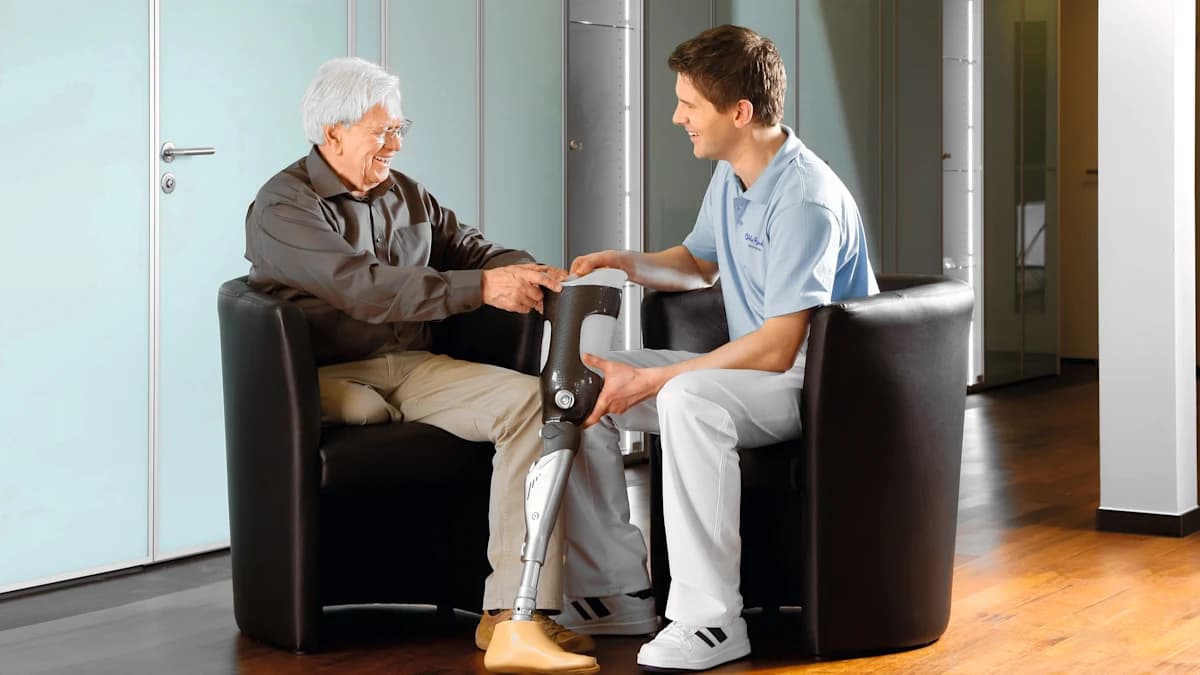
For most patients, the first prosthesis is fitted 2–3 months after surgery.
One of the first questions patients and their families ask after an amputation is usually this: “When can I start using my prosthesis?” There is no single answer that applies to everyone, because the timing depends on how quickly the wound heals, the level of the amputation and the person's general state of health.
Even so, the process follows clear stages with typical timeframes. In this article we walk through the journey step by step — from the days after surgery to the first prosthesis, and on to the definitive one.
The process at a glance
- 1First 14 days: The surgical wound closes and the sutures or clips are removed.
- 2From the first weeks on: Compression therapy reduces oedema and shapes the residual limb.
- 3Months 2–3: The residual limb is measured and the first (interim) prosthesis is fitted.
- 4After 3–6 months: Once the limb volume has stabilised, the definitive prosthesis is made.
First stage
The wound has to heal first.
Before a prosthesis can be fitted, the surgical wound must have closed. This usually happens within the first 14 days, and the sutures or clips are removed during this period. However, a closed wound does not mean the tissue has fully healed: the scar tissue beneath the skin can take up to 18 months to mature completely. That is why residual limb care remains important throughout the whole prosthetic process.
In these first weeks the goal is not only to heal the wound, but also to prepare the body for a prosthesis. Correct positioning in bed, breathing exercises and gentle muscle-strengthening movements all begin at this stage. Preventing joint stiffness and muscle shortening lays the foundation for walking comfortably with a prosthesis later on.
Preparation
Controlling oedema and shaping the residual limb.
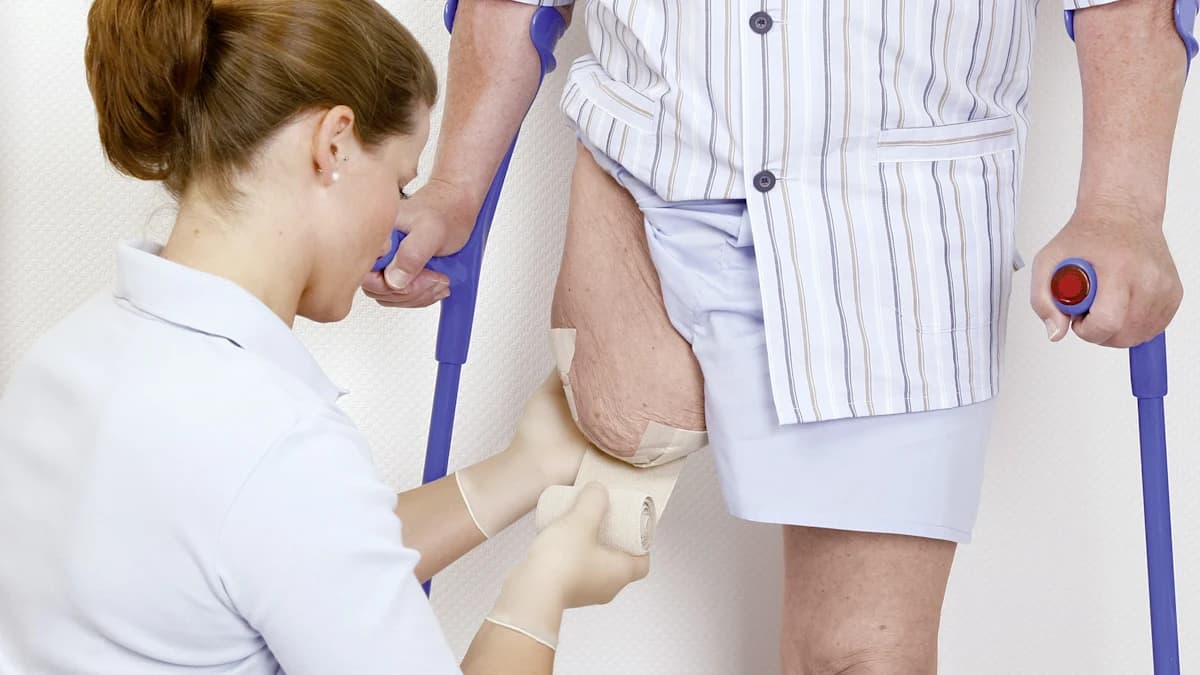
Swelling (oedema) in the residual limb after surgery is a natural response and usually starts to subside within a week. But for a prosthesis to fit properly, the limb needs to take on a defined shape. Once your doctor considers it appropriate, compression therapy begins: elastic bandages, silicone liners or special compression socks are used to apply controlled pressure to the residual limb.
Compression therapy has three important benefits:
- It reduces oedema and so speeds up healing.
- It shapes the residual limb to fit the prosthetic socket.
- It supports blood circulation and helps to reduce pain.
The therapy continues until the limb volume no longer changes. The circumference of the residual limb is measured at regular intervals; once those measurements stabilise, it is time to take the cast for the prosthesis.
First step
The interim prosthesis: your first fitting at 2–3 months.
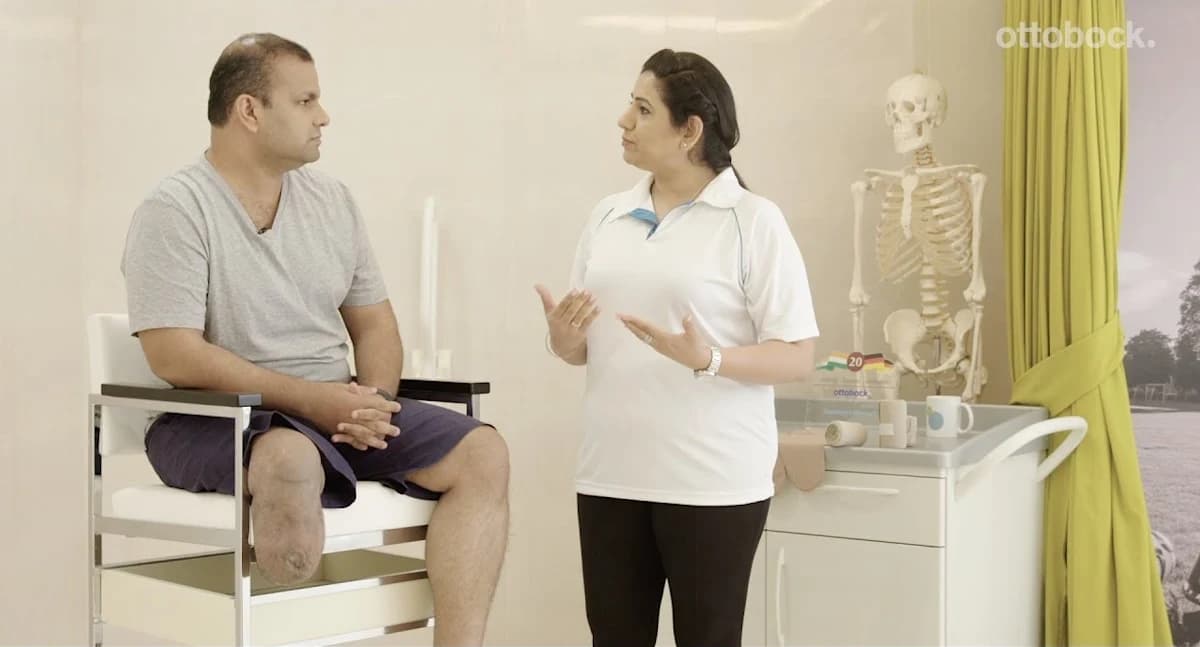
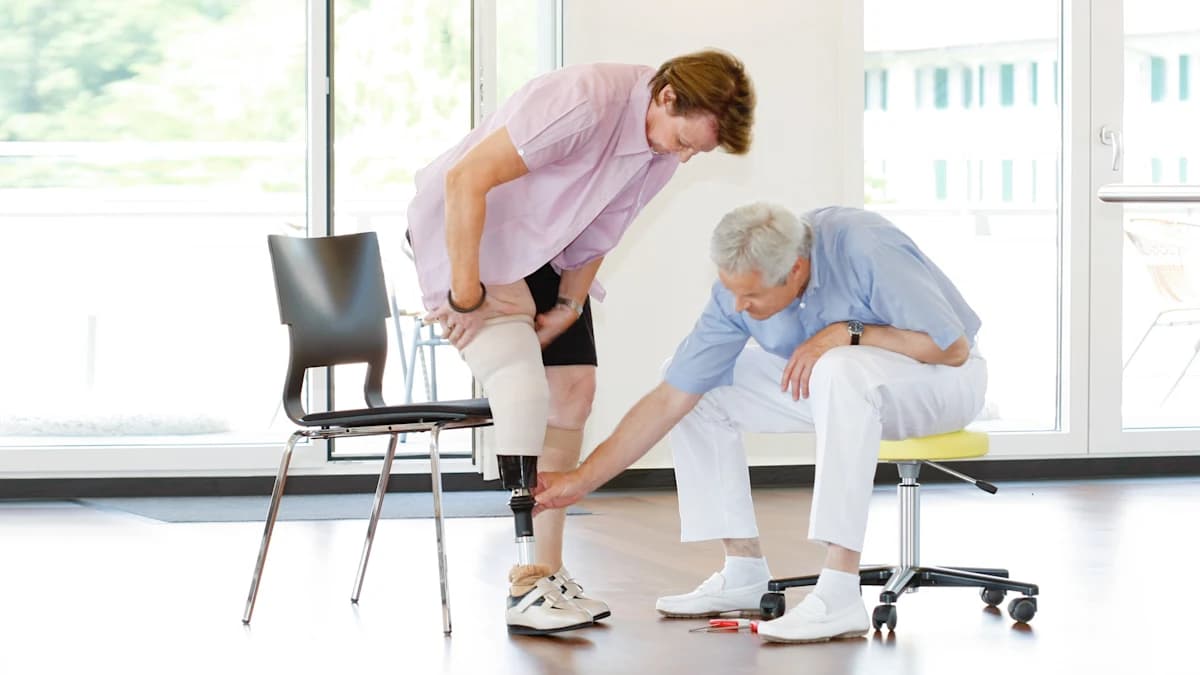
Once the wound has healed and the oedema has largely subsided — generally 2–3 months after surgery — the residual limb is measured and the first prosthesis is made. This is called the interim prosthesis, and it is worn for around 3 to 6 months on average.
So why isn't the definitive prosthesis made straight away? Because the residual limb is still changing at this stage. As the muscles adapt to the new situation and the oedema fully resolves, the limb continues to reduce in volume. A socket that fits perfectly today may feel loose a few months from now. The interim prosthesis tolerates these changes and, just as importantly, lets the patient begin gait training early.
Next stage
Moving on to the definitive prosthesis.
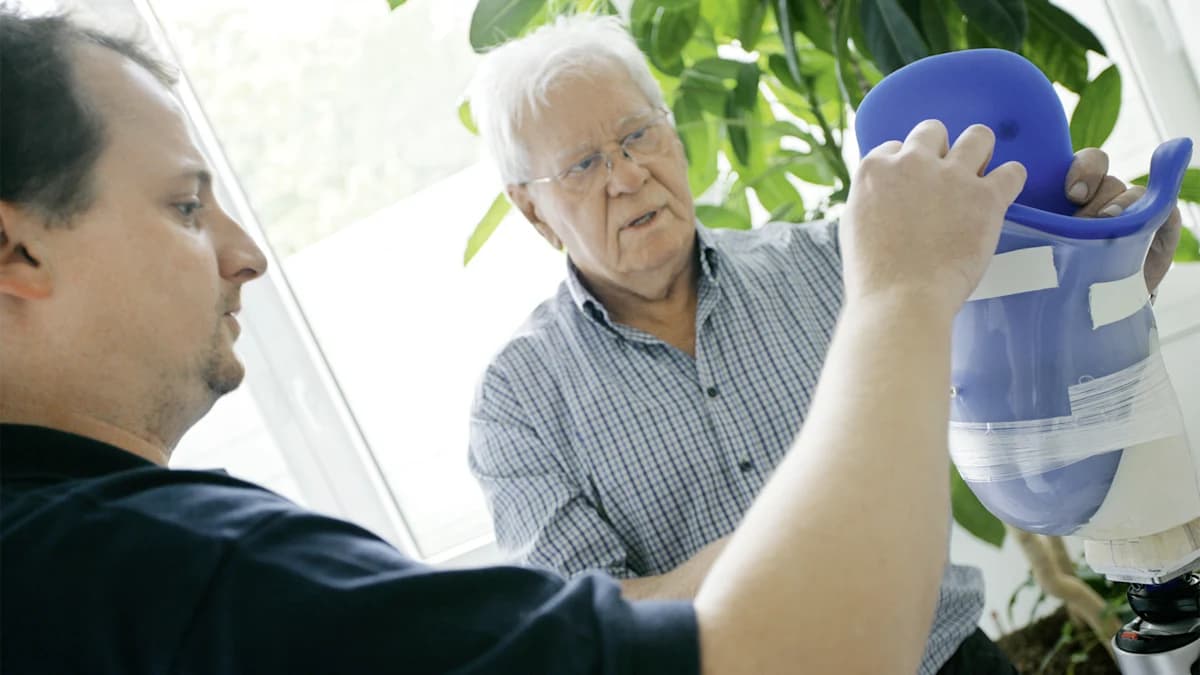
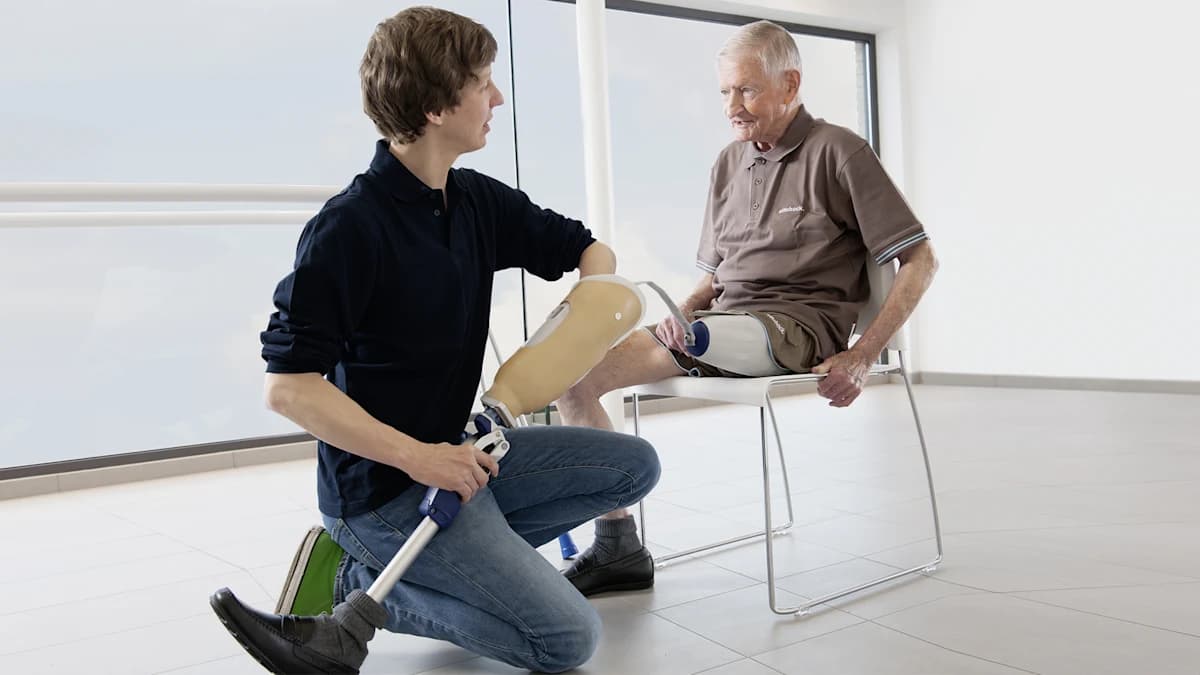
When the fluctuations in limb volume have stopped — in other words, once the residual limb has “matured” — the definitive prosthesis is made. It is planned around the person's lifestyle, activity level and individual needs. By this point the patient has usually completed gait training with the interim prosthesis, which makes adapting to the definitive one considerably easier.
Timing
Factors that influence the timing.
Even two people with an amputation at the same level can follow different prosthetic timelines. These are the main factors that affect how long it takes:
The cause of the amputation
Where the amputation was caused by diabetes or vascular disease, wound healing can progress more slowly.
General state of health
Cardiovascular health, nutrition and age all have a direct effect on the speed of healing.
Condition of the residual limb
Problems at the wound site, pain or circulatory issues can extend the process.
The patient's own involvement
Patients who keep up with their exercises and stay consistent with residual limb care reach their prosthesis noticeably sooner.
How the process differs for arm amputations
Arm amputations follow similar stages: the wound generally closes within 3–4 weeks and the rehabilitation period lasts around six months. For people with an arm amputation, moving the shoulder joint early on is especially important in order to prevent joint stiffness.
After the fitting
After the prosthesis is fitted: rehabilitation.
Being fitted with a prosthesis is not the end of the journey but the start of a new stage. Rehabilitation usually lasts up to six months, with the doctor, physiotherapist and prosthetist working together. The patient first learns to put the prosthesis on and take it off independently, then to stand and shift weight between parallel bars. Walking on level ground gradually gives way to training on stairs, ramps and uneven terrain.
Daily residual limb care becomes part of the routine during this period: the limb is washed every morning and evening with a mild soap, dried thoroughly and the skin supported with suitable creams. Any redness, pressure point or blistering should be reported to the prosthetic team. With leg amputations, it is equally important to protect the sound leg — well-fitting shoes and regular check-ups are recommended for the leg that now carries the extra load.
Experience is also a useful criterion when choosing a rehabilitation centre: look for centres with specialist teams that treat at least 50 patients with an amputation each year.
Consistent participation is decisive here too: patients who take an active part in rehabilitation are far more successful at making the prosthesis a natural part of their everyday life.
Frequently asked questions about prosthetic timing after an amputation.
The first (interim) prosthesis is fitted once the surgical wound has healed and the oedema is under control. For most patients this falls 2–3 months after surgery. The exact timing is decided by the doctor and prosthetic team assessing the condition of the residual limb.
An interim prosthesis is worn for around 3 to 6 months on average. The volume of the residual limb is monitored throughout this time; once the measurements stabilise, the definitive prosthesis can be made.
Compression reduces oedema, shapes the residual limb to fit the prosthetic socket and supports circulation. Without this preparation, a prosthesis cannot fit the limb properly.
It varies from person to person, but rehabilitation generally lasts up to six months. The level of amputation, age, muscle strength and how consistently you take part in the exercises all affect this.
Let's work out the right timing for your prosthesis together.
Our specialist team guides you and your family through every step — from wound healing and compression therapy to your interim prosthesis and on to the definitive one.
Contact Us