After a leg amputation
Read about what to expect after a leg amputation, how to heal your residual limb, and finding the right rehabilitation facilities.
After leg amputation
Overview
After your amputation, an interdisciplinary team will prepare you for everyday life with a prosthesis – including residual limb care, handling, and gait training with a leg prosthesis. Once your residual limb wound has healed, your rehabilitation will begin a few weeks after the operation. In most cases, initial rehabilitation will take up to six months.
During your rehabilitation you will be cared for by a team of doctors, nurses, physiotherapists and occupational therapists, and your therapy programme will be adapted to your current health and functional needs. Initially, you will usually have a daily physiotherapy session with gait training, plus occupational therapy, spread throughout the day with regular breaks. Your active participation is crucial to the rehabilitation results, and your team can also support you in questioning or modifying parts of your previous lifestyle.
Gait training
The goal of rehabilitation is to prepare you for life with your prosthesis. First, this includes regaining your strength, endurance and coordination through targeted physiotherapy. In addition, gait training will teach you how to use your prosthesis.
The basic functioning of the knee joint you are prescribed will play a major role in gait training for transfemoral (above-knee) amputees. For this reason, your training programme will be tailored to the prosthetic components you are using. The programme is aimed at relearning everyday movements and explaining how your prosthesis works.
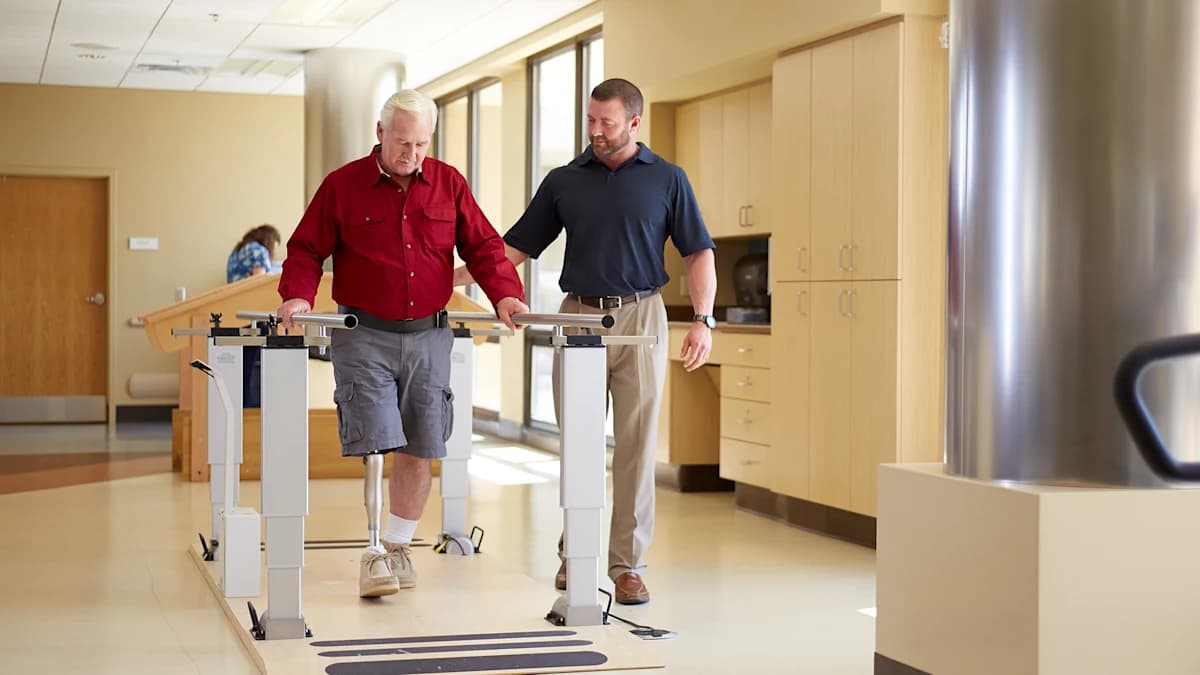
From shifting your weight between parallel bars to walking outdoors with confidence, your therapist will guide every step of the journey.
Putting on
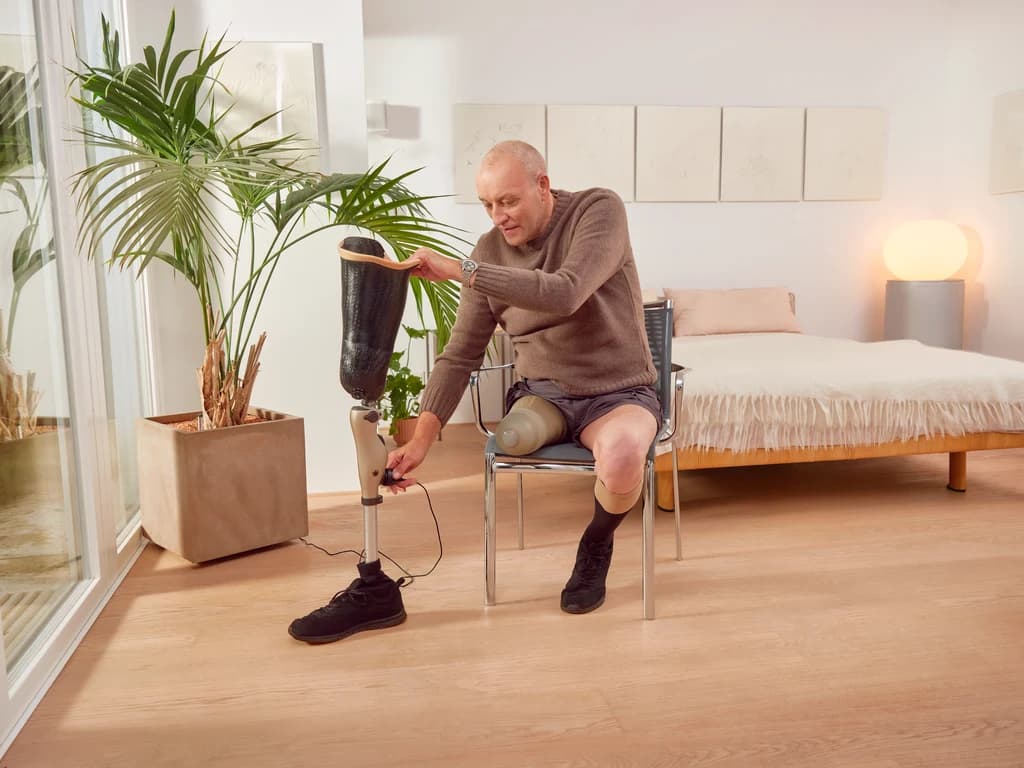
Putting on and taking off your prosthesis correctly by yourself is the basis for walking with a prosthesis, which you will practise first. Your family may have to help you at first, so it is important to include them in rehabilitation, but the goal is for you to learn how to do this independently. There are various ways to put on a prosthesis, depending on the type you have been prescribed and the condition of your residual limb. Your therapist or prosthetist will show you the best method for you.
Sit & stand
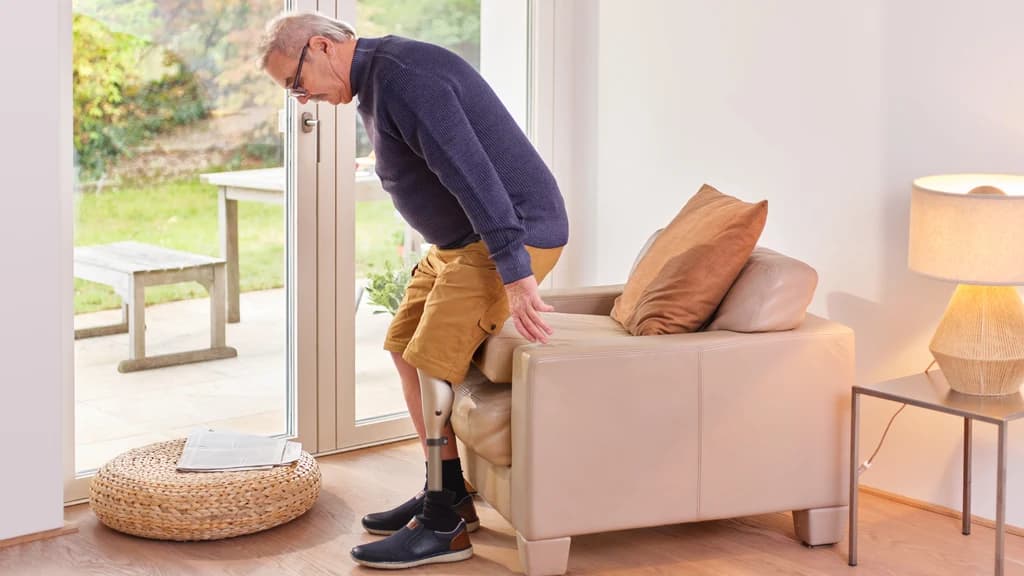
Once you know how to put on and take off your prosthesis correctly, sitting down and standing up are the next everyday actions to learn. Users with a transfemoral (above-knee) amputation who have a knee joint that supports sitting down can put weight on both legs while sitting. This significantly relieves the sound side and helps prevent problems from excessive strain. Users with a transtibial (below-knee) amputation should likewise put the same amount of weight on both legs when sitting down and standing up.
Walking
Once you are confident in using your prosthesis in general, actual gait training can begin. The focus now moves on to improving balance and coordination, sufficient weight bearing on the prosthetic side, and straightening the pelvis and upper body. Your physiotherapist will also continue to work on strengthening your muscles, because strong muscles are essential for stable posture while walking.
First, you will learn how to shift your body weight and stand on one leg between parallel bars. Don’t support all your weight with your arms and sound leg; use your prosthesis too. As soon as you can walk between the bars you start the first exercises without support, gradually reducing the use of any walking aids you may need at first. All gait exercises are monitored by your physiotherapist to ensure no gait deviations creep in. Over time you will learn to walk unaided.
Once you have mastered walking on level ground, you will start to practise walking on various other surfaces.
Stairs & ramps
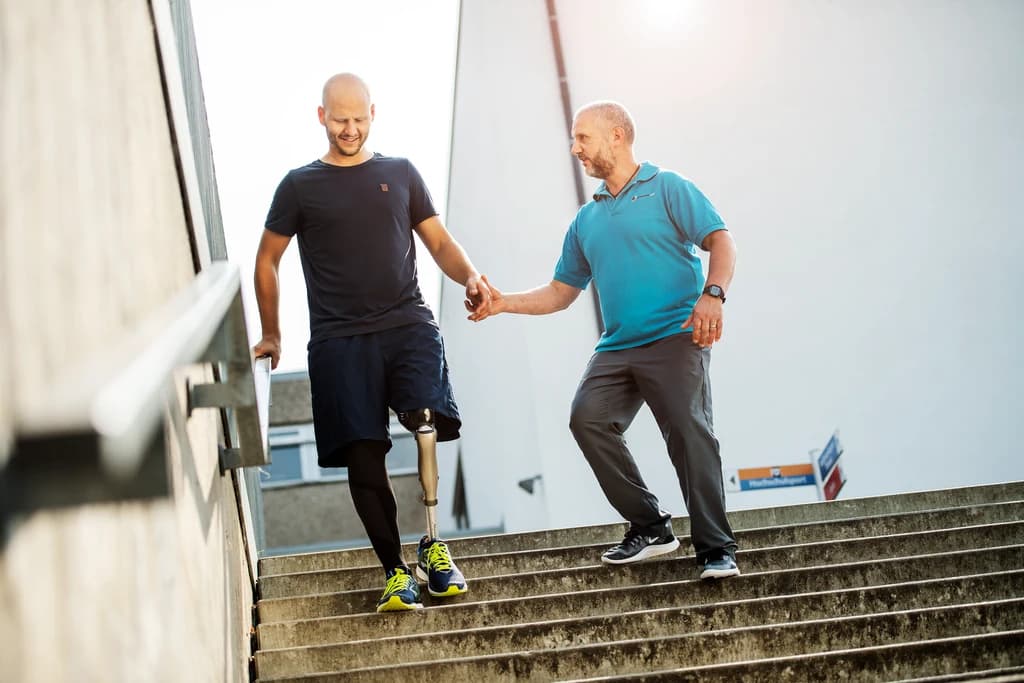
Encountering obstacles is part of daily life: kerbs, stairs in your home or a ramp leading up to the garage. Walking safely on stairs and ramps is a constant part of your daily life and will be practised with your physiotherapist during gait training. The individual components of your prosthesis will determine which walking technique is right for you.
Residual limb care
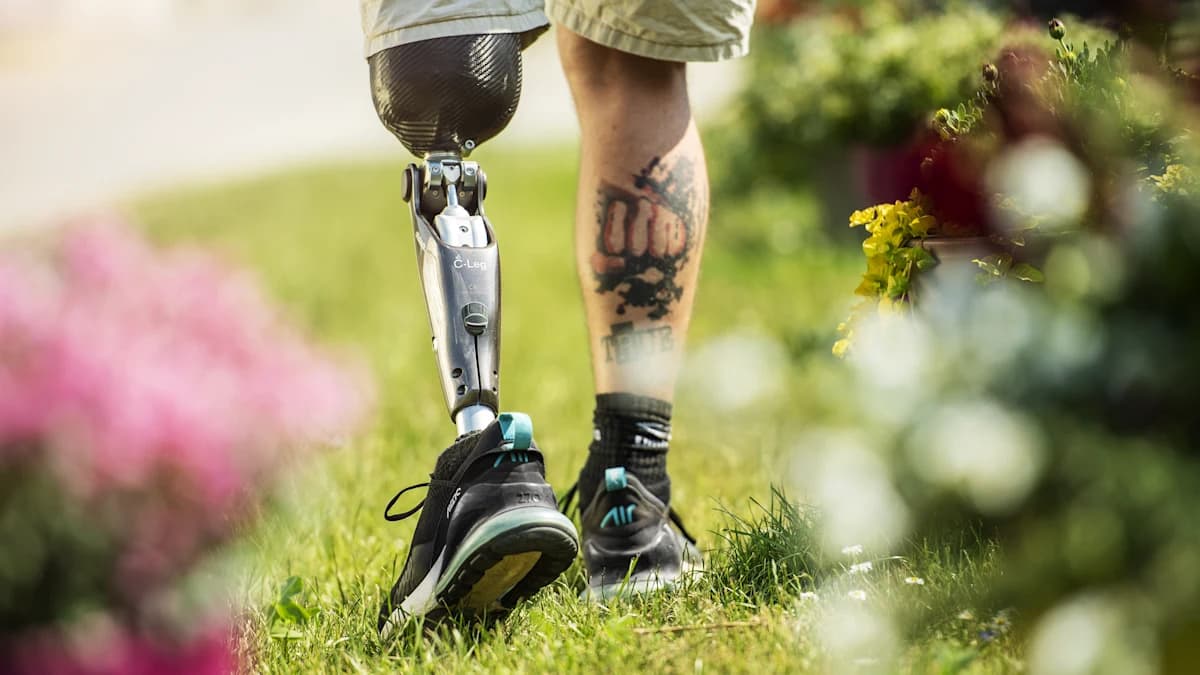
In hospital, the nursing staff and doctors will take care of your residual limb by cleaning the wound and changing the bandages or dressings. As you begin your rehabilitation, you will be shown how to care for your residual limb, the scar and your sound leg yourself. Regular and intensive care is essential so you can wear your prosthesis without problems, and there are special care products designed for the residual limb. Over time, you will develop a daily care routine that becomes a natural part of your everyday life.
Daily care
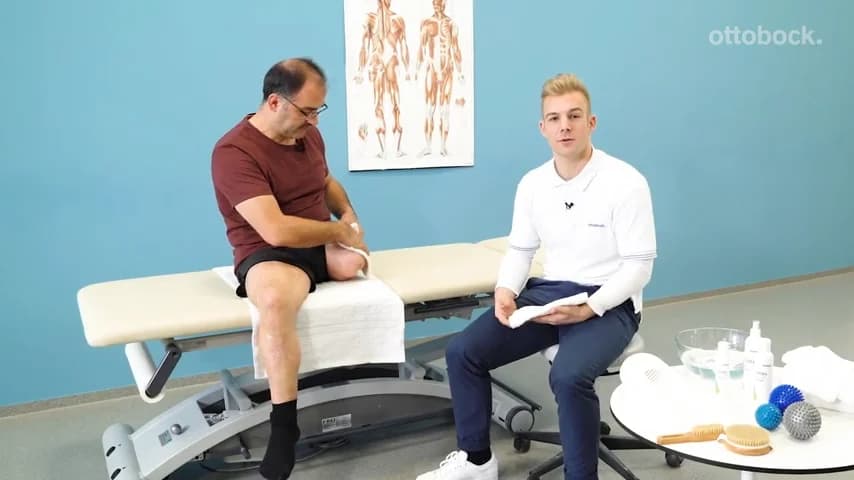
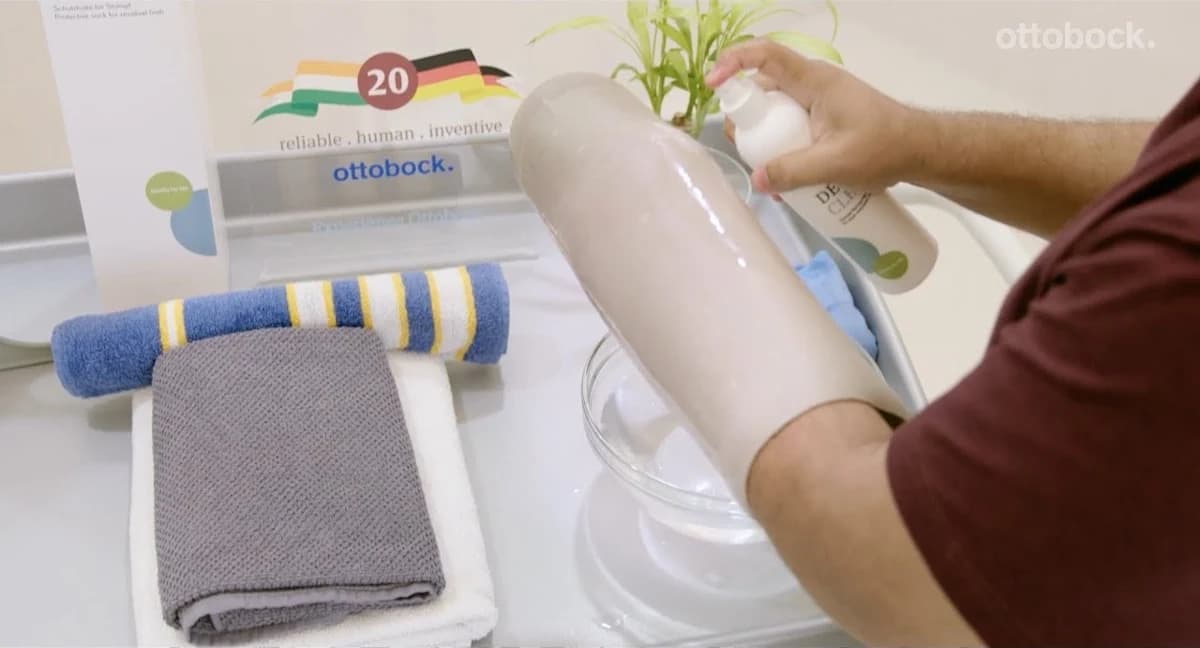
During your rehabilitation, you will be shown how to properly care for your residual limb. To prevent the skin from becoming rough, wash your residual limb with water and a mild soap (for example Derma Clean) in the morning and evening. Then dry the skin thoroughly or carefully dab it dry and apply a cream. Special products such as Derma Repair and Derma Prevent are designed for residual limbs and highly stressed skin: Derma Prevent helps prevent chafing by covering the skin in a protective film, while Derma Repair eases the consequences of stressed skin and protects it from external influences. Putting on your prosthesis immediately after washing in the morning can be more difficult than usual, since warm water causes the skin on the residual limb to swell slightly.
In addition to caring for your residual limb, your prosthesis should also be cleaned daily — your prosthetist will be happy to advise you. Wipe the inner socket with a damp cloth to remove perspiration and skin particles, since a clean contact surface to the skin helps prevent skin irritation. If you wear a liner, care for it daily according to its instructions for use.
Help for limb problems
If wrinkles or drawn-in scars have formed on your residual limb, special care is required to prevent infections; your rehabilitation team can give you specific advice. While caring for your residual limb, also look for skin injuries, pressure points and blisters, as these may require medical treatment. A mirror can help you examine the back of your residual limb. Regularly massaging and gently stretching the scar is another important element of residual limb care and helps desensitise the sensitive skin.
Sound leg
After your amputation, your residual limb won’t be able to support a lot of weight. This automatically puts greater strain on your sound leg. However, it is very important that your sound leg remains healthy so you can regain your mobility.
If you have a circulatory disorder, regularly examine your sound leg for minor injuries; in the event of infection they could become dangerous and should be treated immediately by a doctor. Comfortable shoes with a good fit reduce the strain on your sound leg, and insoles may also be recommended. Choose socks made of wool or cotton so they absorb perspiration well; the cuff should not be too tight, as it can disrupt blood circulation. Socks should fit without wrinkles and be worn only for one day. With circulatory issues it is also important not to transfer to a wheelchair barefoot, and not to stand or walk barefoot — the risk of injury is too high. In bed, a padded support under the heel and ankle of your sound leg can help prevent pressure points.
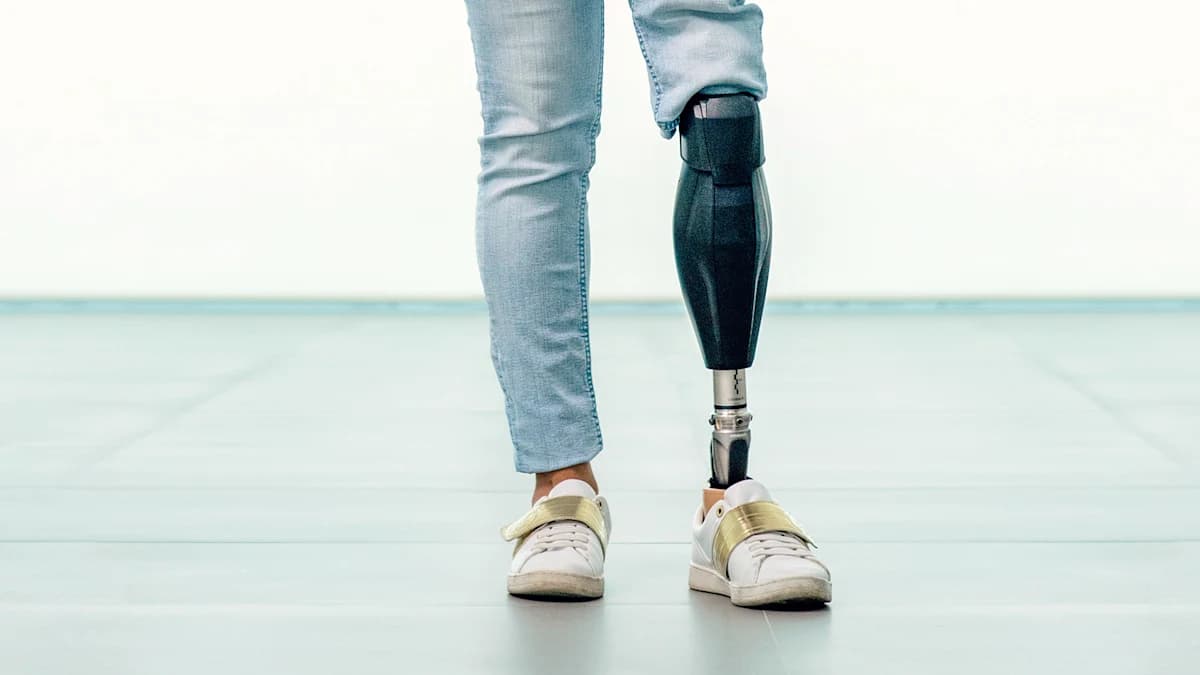
Various types of pain may occur in your residual limb after an amputation. These may include bone pain, wound pain, nerve pain or phantom limb pain. Pain is treated according to its cause — for example with medication, warming or cooling, or by wrapping the residual limb. Talk to your specialist and/or pain therapist about this.
Sensory disturbances may occur on your residual limb after an amputation, due to the severing of nerves during the operation. These unfamiliar sensations often return to normal on their own over time. You can support this process by exposing your residual limb to various sensory stimuli — for example by rubbing the skin with a terry towel or a soft brush.
After your operation, your residual limb will be swollen and the skin will be sensitive, and your wound also needs time to heal. A comprehensive rehabilitation plan should be in place and the first stages completed before treatment with a prosthesis begins.
In most cases, yes. After your amputation you should contact the relevant licensing authority for guidance specific to your situation. Adaptations to your car can also be made to make it easier for you to drive.
Depending on your job, you can go back to work with your prosthesis. If your job involves extreme physical strain, you should inform your prosthetist before the prosthesis is fabricated, since the type of strain affects the properties of the prosthetic socket and the selection of components.
There is no general answer to this question. If the socket of your prosthesis fits well over the long term and you don’t experience any difficulties, you won’t need a new prosthesis until the warranty on yours expires.
Further information
Read about what to expect after a leg amputation, how to heal your residual limb, and finding the right rehabilitation facilities.
After leg amputationLearn about the planning process, amputation levels, the treatment team and how to prepare for your surgery.
Before leg amputationLearn how prosthetic legs help people regain their mobility, rebuild their confidence and explore their world again.
Prosthetic legsFind out when the first prosthesis is fitted after an amputation and how the interim and definitive stages work.
When is a prosthesis fitted?Our specialist team will guide you through every step of rehabilitation after a leg amputation — from gait training and daily care to choosing the right prosthetic components.
Contact Us