After a leg amputation
Read about what to expect after a leg amputation, how to heal your residual limb, and finding the right rehabilitation facilities.
After leg amputation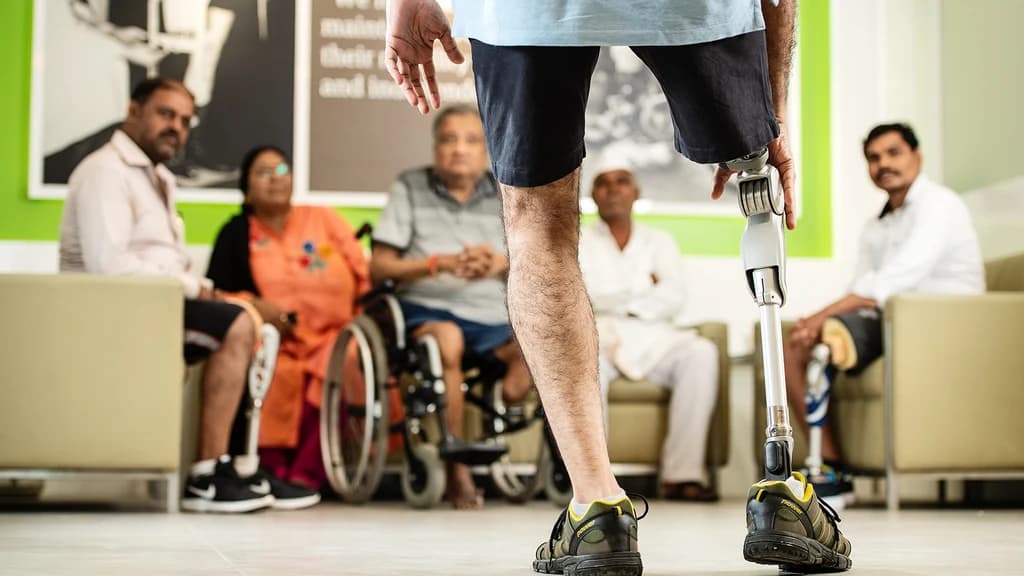
Summary
You may have known about your amputation surgery for a while or may have just found out. Either way, we understand that this is difficult to hear. Remember you are not alone — your treatment team, family and loved ones are there to support you. We want to help you prepare for this step, learn what happens when a leg is amputated, who looks after you and what happens afterwards.
Here are a few of the topics your team will discuss with you, and that you'll learn about in this article:
Get in touch with experts
Even though it's so important, many people don't realise that you can have an influence on who will be treating you. Your care team includes everyone who looks after you during and after the amputation — your doctor, nurses, prosthetist, physiotherapist and occupational therapist.
It's important that you are treated by specialists with plenty of experience caring for leg amputees. Learn about the general treatment process and the various tasks of everyone involved, then use a checklist to make sure you've considered all the steps.
Reasons for amputation
An amputation is the surgical removal of part of the body and is required when an injured or diseased body part is not expected to heal and as a result poses a risk to the patient's life. Causes may include circulatory disorders, infections, accidents, cancer or a congenital limb difference (dysmelia). In some cases the need for an amputation is known some time in advance; in others it becomes necessary unexpectedly, for example after a severe injury.
One of the most common causes of amputations in the Western world is occlusive arterial disease (inadequate blood flow due to narrowing of the arteries). With a circulatory disorder, the supply of oxygen to the leg is no longer sufficient, and those affected often experience pain and find walking uncomfortable. Their leg or foot may feel colder than the rest of the body and sometimes appear bluish in colour. A lower limb amputation is only performed if blood circulation cannot be restored by other vascular surgery procedures.
Diabetic foot syndrome (DFS) is one of the most common causes of leg or foot amputations. Although the number of people with diabetes is rising, the number of amputations is changing very little thanks to better disease control, treatment methods and patient education.
High blood sugar levels can damage the nerves and blood vessels in your body. If the nerves in your legs or feet become damaged (neuropathy), you may no longer be able to feel pain — this can lead to cuts or ulcers going unnoticed and resulting in infections.
Diabetes can also reduce perspiration, causing your feet and legs to dry out and crack, and uncontrolled diabetes may affect circulation, making it more difficult for the body to deliver nutrients to wounds and slowing healing.
The frequency of amputations after accidents — including work and traffic accidents — has decreased considerably in the Western world. There are many reasons for this, including higher occupational health and safety standards as well as advances in medical treatment. Progress in intensive care and surgery means that nerves, vessels, bones and soft tissue of injured limbs can be restored in many cases, so amputation is not always required as the last resort.
Amputations due to cancer are relatively rare. However, tumours close to the knee or in the area of the hip are the most common to result in amputation. This occurs when the tumour needs to be removed to save the patient's life and prevent the spread of cancer cells to other parts of the body.
Any wound is open to infection; however, amputations resulting from infections have become extremely rare since the discovery of antibiotics. High sterile standards in medical treatment and tetanus shots are another reason for the decrease. Nevertheless, remaining vigilant — even with the tiniest injury — and looking out for signs of inflammation, reddening of the skin, swelling, fever and pain in a wound can help.
Amputation levels
The term "amputation level" describes the location at which a body part is amputated. It is determined by your surgeon before the operation and is based on the reason for amputating. If your surgery is planned, your prosthetist may be included in consultations beforehand — they can help find the right device for you based on your amputation, lifestyle and favourite activities.
There are more than twelve different amputation levels in the foot, ranging from a toe amputation to a midfoot amputation up to the tarsals.
Prostheses to plan for: • Custom cosmetic silicone prostheses to restore your foot's natural appearance
For a transtibial amputation (also known as "below knee" or "BK"), the amputation occurs through the tibia and fibula bones of the lower leg.
Prostheses to plan for: • A prosthetic foot such as the Taleo or Empower • A custom socket, which contains the residual limb (commonly referred to as the "stump") and connects it to the prosthesis • Connectors and adaptors for different components of your prosthesis
In knee disarticulation surgery the knee is separated and the lower leg is removed. The entire thigh is retained.
Prostheses to plan for: • A prosthetic foot such as the Taleo or Empower • A prosthetic knee joint such as the C-Leg 4 • A custom socket that contains the residual limb and connects it to the prosthesis • Connectors and adaptors for different components of your prosthesis
With a transfemoral amputation (also known as "above knee" or "AK"), the amputation occurs through the femur bone.
Prostheses to plan for: • A prosthetic foot such as the Taleo or Empower • A prosthetic knee joint such as the C-Leg 4 • A custom socket that contains the residual limb and connects it to the prosthesis • Connectors and adaptors for different components of your prosthesis
During a hip disarticulation, the amputation is performed in the area of the hip joint. With this amputation, the pelvis will later control the prosthesis.
Prostheses to plan for: • A prosthetic foot such as the Taleo or Empower • A prosthetic knee joint such as the C-Leg 4 • A prosthetic hip joint such as the Helix3D • A custom socket that contains the pelvic area and connects it to the prosthesis • Connectors and adaptors for different components of your prosthesis
In a hemipelvectomy, the entire leg and parts of the pelvis up to the sacrum are amputated. With this amputation, the pelvis will later control the prosthesis.
Prostheses to plan for: • A prosthetic foot such as the Taleo or Empower • A prosthetic knee joint such as the C-Leg 4 • A prosthetic hip joint such as the Helix3D • A custom socket that contains the remaining pelvic area and connects it to the prosthesis • Connectors and adaptors for different components of your prosthesis
Treatment team
Losing your leg is a major medical procedure, and a team of experts from various disciplines will handle your treatment before and after your amputation. Below are the members of this team and the role each of them plays. Your prosthetist plays a pivotal role within this team — if you can, it may be beneficial to speak with them before your amputation.
Your surgeon will meet with you before the amputation operation to advise on the amputation level and may coordinate with your prosthetist. After the surgery, your surgeon will monitor your recovery and rehabilitation.
After your amputation, the nursing staff in the hospital will look after your wound healing and ensure the correct positioning and compression of your residual limb. Ideally, this will be coordinated with your surgeon, prosthetist and physiotherapist.
Physiotherapists and occupational therapists assist you in the hospital, during rehabilitation and in everyday life. Their role is to get you moving, strengthen and stretch your muscles, and help you learn — and continue to improve — walking and coping with daily life. Therapists can also help with compression therapy in the hospital.
Your prosthetist plays a central role after your amputation surgery. They will fit you with a suitable prosthesis and offer advice on any questions you have. Leading up to an amputation, your prosthetist may discuss with your surgeon what your residual limb should look like if possible. They can recommend experienced physiotherapists and put you in contact with other amputees, and you can also ask them about home conversions or vehicle alterations.
When fitting you with a prosthesis, your prosthetist will clarify your needs and preferences and discuss the various treatment options with you. Based on this, they select the appropriate prosthetic components and fabricate your prosthesis with a customised socket.
Your family and friends will also contribute to your rehabilitation by supporting you to the best of their ability in daily life. The exact role they play will depend on your needs and requirements, but they can help with everyday tasks as well as the daily use of your prosthesis. Depending on your situation, outpatient nurses can also assist you with using your prosthesis and take charge of compression and mobilisation in everyday life.
Further information
Read about what to expect after a leg amputation, how to heal your residual limb, and finding the right rehabilitation facilities.
After leg amputationDiscover detailed information on caring for the residual limb, handling prostheses and gait training for a life with a leg prosthesis.
First steps with a prosthesisLearn how prosthetic legs help people regain their mobility, rebuild their confidence and explore their world again.
Prosthetic legsReach out to our team for personal guidance, product information and to be connected with experienced clinicians and peer support.
Contact Us