
Pre-amputation preparation
A step-by-step guide on what to consider and how to prepare your patients and their relatives for a planned amputation.
Learn more ›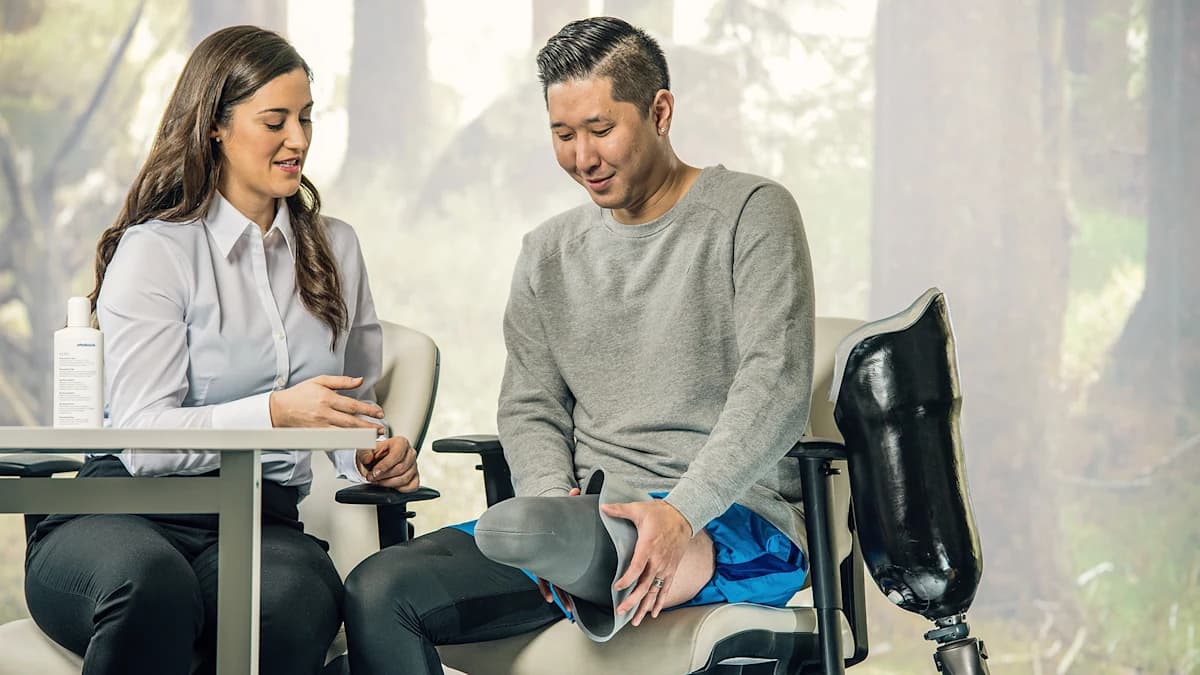
Back to Mobility
Learn more about preparing your patient for their first prosthetic fitting and restoring their mobility. Find out more about how to explain the components of prosthetic legs.
Contact usRestoring mobility
After the acute phase of your patient's recovery, they will be ready to move on to the next key step in their rehabilitation: being fitted for a prosthesis and learning how to walk on it.
They'll typically begin that process with an initial prosthesis manufactured during the post-operative period after their surgical wound has healed. Most patients will use their initial prosthesis until the volume and musculature of their residual limb have both stabilised.
This period gives your prosthetic team an opportunity to explore the optimal socket fit and identify the right components for their final prosthesis.
What's in a prosthesis
When it comes to selecting components for a lower-limb prosthesis, your prosthetic team can choose from a wide variety of products, construction techniques and functions. The right combination for each patient will differ depending on their amputation, residual limb and physical capability.
The two most common lower limb amputations — transtibial (TT) and transfemoral (TF) — typically require some combination of the following components:
Critical connection
This critical component forms the connection between the amputee's residual limb and the rest of their prosthesis. Each socket is built specifically for its wearer, usually using light, durable materials like carbon, silicone or lamination resin.
The socket has three critical functions that help ensure a safe, comfortable walking experience:
Suspension & comfort
These two components define the connection between the user's residual limb and prosthetic socket. Together, they ensure that the socket doesn't slip off the user's residual limb while walking.
Suspension systems usually work with specific liners and are typically designed to work in one of two ways: either through negative pressure (a vacuum seal) or using a mechanical setup. The right system for each user often depends on the shape and height of their residual limb.
TF only
This replacement joint is a critical component of any prosthetic solution for users with an above-knee amputation. Prosthetic knees come in multiple different formats, but typically fall into one of three groups defined by how the joint functions under load:
While these components offer a variety of different functions, designs and capabilities, it's always best to start with the user's mobility, lifestyle and activities when selecting a knee joint for their prosthesis.
Individually adjusted by a prosthetist, each kind of prosthetic knee offers different benefits for the user to consider during the selection process. For example:
TT and TF
Another key component of any lower-limb prosthesis is the prosthetic foot. This component plays an important role in stabilising the user when they're standing or walking. Today's prosthetic teams can choose from a wide variety of feet that support different gait styles, daily activities and other additional user needs.
Several different characteristics of a prosthetic foot can affect how well it performs for a specific user. A few important factors to consider are:
Ankle functionality: A foot may function very differently depending on whether its ankle is movable or not. Non-movable ankles can be made from a variety of different materials (e.g. carbon fibre or fibreglass) with different flexion characteristics that influence how the foot feels during initial contact, mid-stance and terminal stance.
Stiffness: This property of both the heel and forefoot can impact how dynamically the foot responds throughout the gait cycle. Heel stiffness is especially important for establishing safe initial contact, when users must safely transfer energy to the foot so it can be released at toe-off. Some feet optimise this process with moulded carbon fibre heel plates that function as a highly effective, energy-capturing spring.
User footwear: For safety, lower-limb amputees should avoid footwear with slippery soles and uneven heel heights. Heels should also be firm but not too stiff, so the user can softly roll over during walking while still maintaining control of their prosthesis. Some prosthetic feet also feature adjustable heel heights that can give users more options when choosing appropriate shoes.
Cosmetic preferences: While some amputees may like to show off their prosthesis, others will prefer a more natural and discreet look. A wide range of cosmetic covers are available for users who want their prosthesis to blend in with their overall look.
Position & control
These components can serve a variety of functions on a lower limb prosthesis. Some adapters help ensure that a user's prosthesis remains correctly positioned as they move through their day. Other specialised options, like rotation adapters, can give users better control of their prosthesis during some everyday activities (e.g. when getting dressed).
Look & feel
While some amputees may like to show off their prosthesis, others will prefer a more natural and discreet look. A wide range of cosmetic covers are available for users who want their prosthesis to blend in with their overall look.
A step-by-step guide on what to consider and how to prepare your patients and their relatives for a planned amputation.
Learn more ›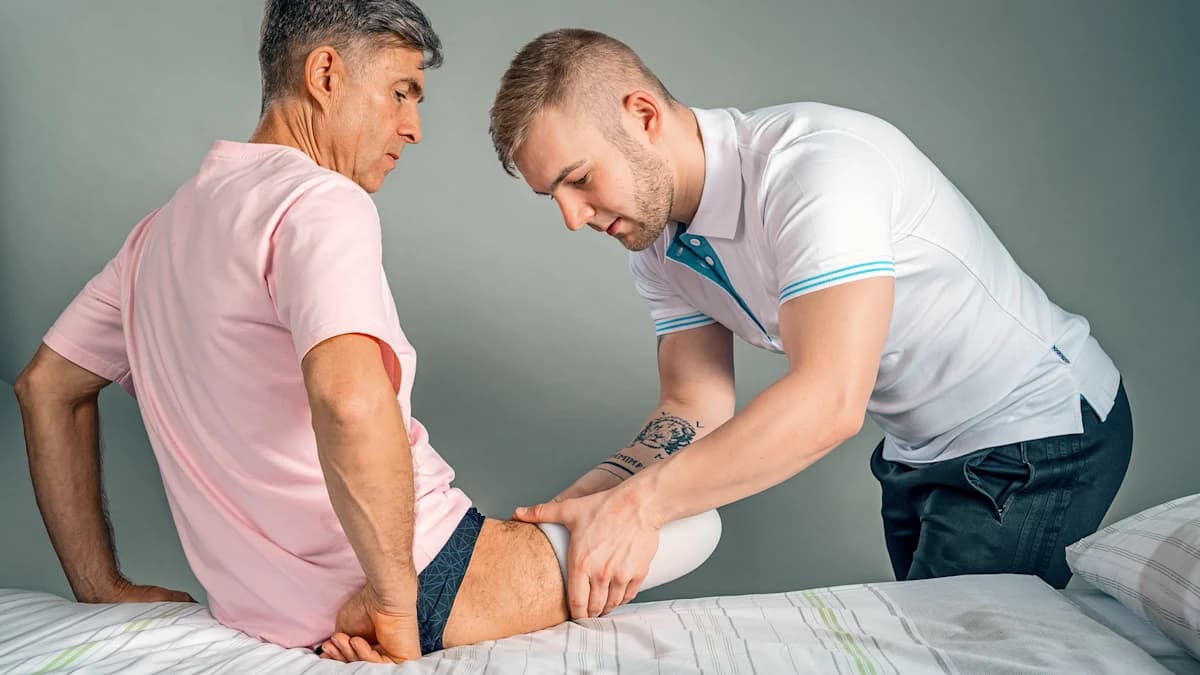
Take the right steps to set your patients up for successful rehabilitation back to mobility.
Learn more ›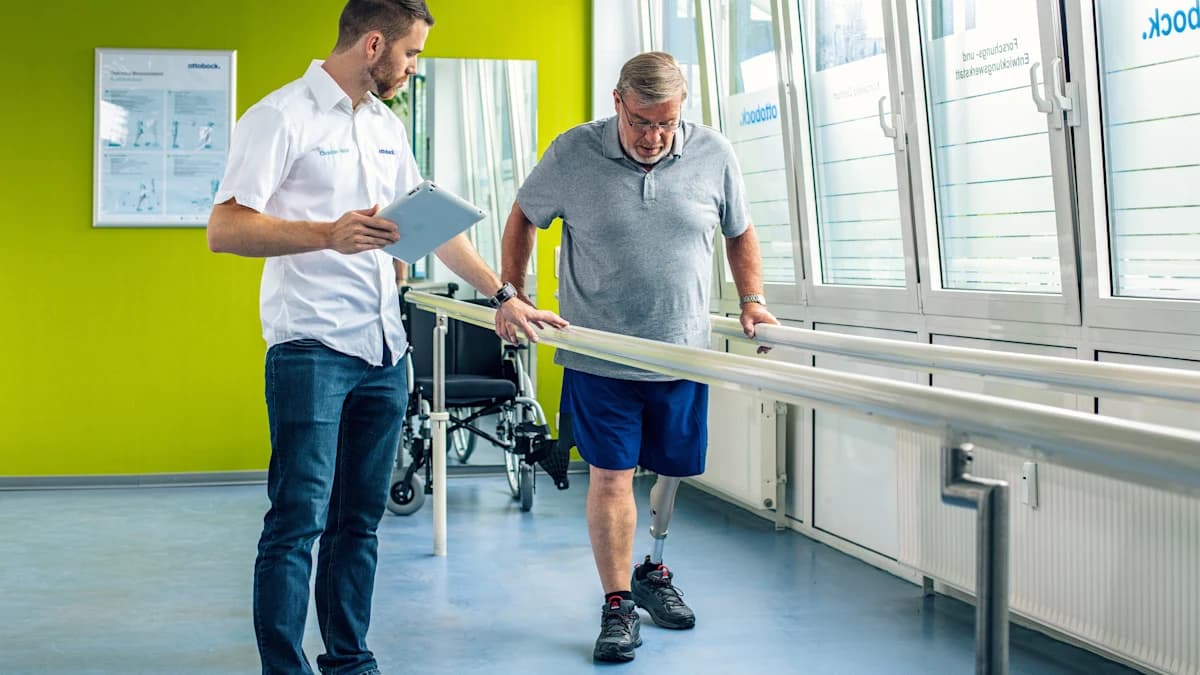
Educate your patients on getting familiar with their prosthesis and guiding them through learning to walk.
Learn more ›
Supporting your patients to resume their daily activities with their prosthetic leg.
Learn more ›Talk to our team about Ottobock components, sockets, liners, knees and feet — and the clinical support we offer across the prosthetic-fitting journey.
Contact us